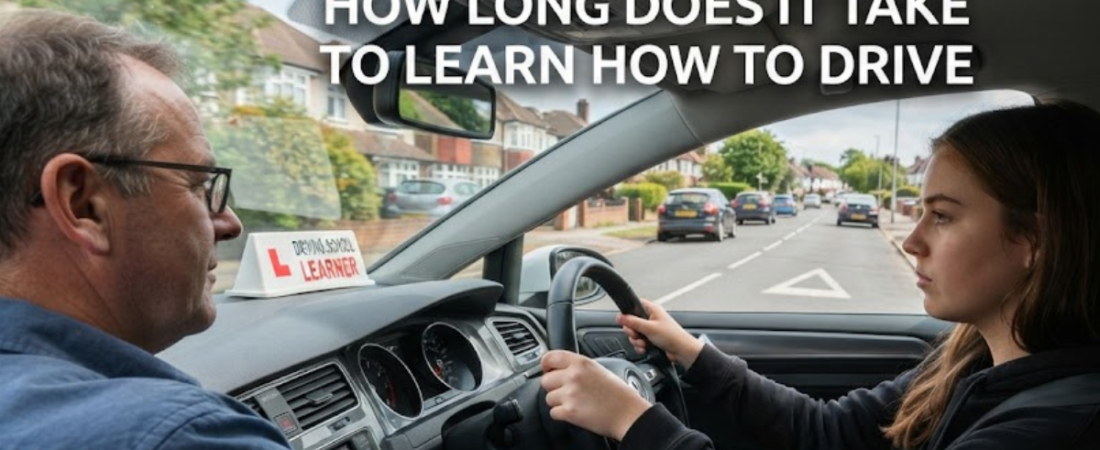
Learning to drive is an exciting milestone, but it’s also one of the biggest responsibilities you’ll take on. If you’re wondering how long does it take to learn how to drive, you’re not alone. Whether you’re a teenager preparing for your first driver’s license or an adult learning later in life, knowing what to expect can help you set realistic goals and stay motivated.
The truth is that there’s no one-size-fits-all answer. Some people become comfortable behind the wheel in just a few weeks, while others need several months of regular practice. Factors such as previous driving experience, confidence, lesson frequency, road conditions, and whether you’re learning in an automatic or manual vehicle all influence how quickly you’ll progress.
This guide explains how long does it take to learn how to drive a car, what affects your learning speed, and how long it typically takes to learn how to drive stick.
The Short Answer: How Long Does It Take to Learn How to Drive?
For most beginners, learning the basics of driving takes 20 to 50 hours of supervised practice, combined with professional instruction where available.
Here’s a general timeline:
- Basic vehicle control: 5–10 hours
- Driving confidently on local roads: 15–30 hours
- Handling highways and complex traffic: 30–50 hours
- Preparing for a driving test: 40–60+ hours
Many driving authorities recommend a combination of instructor-led lessons and supervised practice with an experienced licensed driver.
Remember, passing a driving test doesn’t mean you’ve mastered every situation—it simply means you’ve demonstrated the skills needed to drive safely on your own.
How Long Does It Take to Learn How to Drive a Car?
If you’re learning in an automatic transmission vehicle, the learning curve is generally shorter because you don’t have to manage a clutch or shift gears manually.
Most learners can:
Week 1
- Learn vehicle controls
- Start, stop, and steer
- Practice parking
- Drive in quiet neighborhoods
Weeks 2–4
- Navigate city streets
- Handle traffic lights
- Change lanes
- Improve awareness
Weeks 5–8
- Drive on highways
- Practice parallel parking
- Handle busy intersections
- Prepare for the driving test
With consistent practice several times a week, many new drivers feel comfortable within one to two months.
How Long Does It Take to Learn How to Drive Stick?
Learning how long does it take to learn how to drive stick depends on how quickly you become comfortable using the clutch and shifting gears.
Most learners can expect:
- Basic clutch control: 5–10 hours
- Smooth gear shifting: 10–20 hours
- Hill starts: 15–25 hours
- Confident daily driving: 30–50 hours
Some people master manual transmission within a weekend, while others require several weeks of regular practice.
The key is repetition. Once clutch control becomes second nature, driving a manual vehicle often feels just as natural as driving an automatic.
Factors That Affect How Long It Takes to Learn
Everyone learns differently. Several factors can speed up—or slow down—your progress.
Practice Frequency
Driving three or four times each week generally leads to faster improvement than practicing only once every few weeks.
Consistency helps build muscle memory and confidence.
Professional Driving Lessons
Certified instructors teach proper techniques from the beginning, reducing the likelihood of developing bad habits.
Professional lessons often help learners pass their driving tests sooner.
Confidence Level
Some learners feel relaxed behind the wheel almost immediately, while others need extra time to build confidence.
Feeling nervous is completely normal, especially during the first few lessons.
Road Conditions
Learning in quiet residential neighborhoods is easier than starting in heavy city traffic.
Gradually introducing more challenging environments helps build skills safely.
Automatic vs. Manual Transmission
Automatic vehicles simplify the learning process, while manual cars require additional coordination between the clutch, gears, and accelerator.
Stages of Learning to Drive
Most people progress through several recognizable stages.
Stage 1: Understanding the Vehicle
You’ll learn:
- Dashboard controls
- Mirrors
- Steering
- Braking
- Parking
- Vehicle safety checks
Stage 2: Basic Driving Skills
This stage focuses on:
- Starting and stopping smoothly
- Turning
- Lane positioning
- Speed control
Stage 3: Traffic Awareness
You’ll begin handling:
- Intersections
- Roundabouts
- Traffic signals
- Lane changes
- Defensive driving
Stage 4: Advanced Driving
Eventually you’ll practice:
- Highway driving
- Night driving
- Driving in rain
- Emergency situations
- Parking in busy areas
Tips to Learn Driving Faster
If you’d like to shorten your learning curve, these strategies can help.
Practice Regularly
Frequent practice is more effective than occasional long sessions.
Stay Calm
Mistakes are a normal part of learning. Every experienced driver once struggled with parking, signaling, or smooth braking.
Learn Defensive Driving
Always anticipate what other drivers might do rather than simply reacting.
Ask Questions
Whether you’re learning from an instructor or a family member, don’t hesitate to ask for clarification.
Review the Driver’s Handbook
Understanding road signs and traffic laws makes practical driving much easier.
Common Mistakes New Drivers Make
Being aware of common errors can help you avoid them.
Some frequent mistakes include:
- Looking only directly in front of the vehicle.
- Forgetting mirror checks.
- Braking too hard.
- Following other vehicles too closely.
- Driving too fast for road conditions.
- Becoming overconfident too quickly.
Improvement comes with patience and regular practice.
Signs You’re Ready for the Driving Test
You may be prepared when you can consistently:
- Drive without instructor intervention.
- Perform safe lane changes.
- Parallel park confidently.
- Follow road signs correctly.
- Maintain proper speed.
- Stay calm in moderate traffic.
- Demonstrate good observation skills.
Passing mock driving tests is another excellent indicator.
Frequently Asked Questions
How long does it take to learn how to drive?
Most beginners require 20 to 50 hours of supervised driving practice, although becoming a confident, experienced driver continues well beyond earning a license.
How long does it take to learn how to drive a car?
For automatic vehicles, many learners become comfortable within one to two months with regular lessons and practice.
How long does it take to learn how to drive stick?
Most people learn the basics of driving a manual transmission in 10 to 20 hours, while becoming fully confident often takes 30 to 50 hours of practice.
Can I learn to drive in one week?
You can learn basic vehicle control in a week if you practice daily. However, most people need additional time to gain enough experience for independent driving.
Is driving difficult for beginners?
Driving can feel challenging at first because you’re learning several skills at once. With regular practice, those tasks gradually become automatic.
How often should I practice driving?
Practicing three to five times per week generally leads to faster progress than less frequent sessions. Even shorter, consistent practice drives can be highly effective.
Conclusion
So, how long does it take to learn how to drive? For most people, the basics can be learned within a few weeks, while becoming a confident and capable driver typically requires 20 to 50 hours of supervised practice and ongoing experience. If you’re wondering how long does it take to learn how to drive a car, automatic vehicles generally allow for a quicker learning curve, whereas those asking how long does it take to learn how to drive stick should expect to spend additional time mastering clutch control and gear changes.
The most important factor isn’t how quickly you learn—it’s how safely you learn. Take your time, practice consistently, seek guidance from qualified instructors when possible, and focus on building good driving habits from the start. With patience and dedication, you’ll develop the confidence and skills needed to enjoy safe, independent driving for years to come.