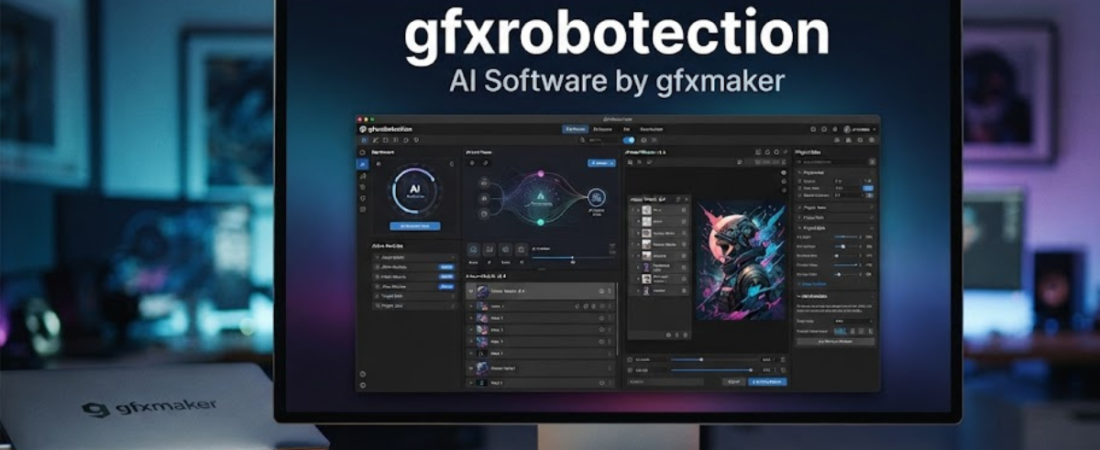
Artificial intelligence is transforming the way designers, marketers, and content creators work. Among the emerging AI-powered creative tools that have attracted attention is gfxrobotection ai software by gfxmaker. Whether you’ve come across the name while researching AI design solutions or are curious about its capabilities, understanding what it offers—and what information is publicly available—can help you make informed decisions.
At the time of writing, publicly verified technical documentation about gfxrobotection ai software by gfxmaker is limited. This article explains the concept, discusses the kinds of AI-powered features such software may provide, and outlines the factors you should consider before adopting any AI creative platform.
What Is GFXRobotection AI Software by GFXMaker?
GFXRobotection AI software by GFXMaker appears to refer to an AI-assisted creative software solution associated with GFXMaker. While detailed official specifications are not widely available, the name suggests a platform designed to simplify graphic creation and automate parts of the design workflow using artificial intelligence.
As with many modern AI design tools, the focus is likely to be on improving productivity, reducing repetitive tasks, and helping users create professional-looking visual content more efficiently.
Because publicly available information is limited, users should verify specific features directly through official product documentation before relying on them for business or production work.
Why AI Design Software Is Becoming Popular
Creative professionals increasingly rely on AI because it can automate time-consuming tasks while leaving room for human creativity.
Common advantages include:
- Faster design workflows
- Reduced manual editing
- Improved consistency
- Easier content creation
- Enhanced productivity
- Support for beginners and professionals alike
Rather than replacing designers, AI generally acts as an assistant that accelerates routine work.
Potential Features of GFXRobotection AI Software by GFXMaker
Although exact capabilities may vary, AI-powered graphic software often includes features such as the following.
AI-Assisted Graphic Creation
Instead of building every design from scratch, users may generate layouts based on prompts, templates, or predefined styles.
This can significantly reduce design time.
Background Removal
Many AI creative platforms automatically detect subjects and remove image backgrounds with minimal manual editing.
Common applications include:
- Product photography
- Social media graphics
- Marketing materials
- E-commerce images
Smart Image Enhancement
Artificial intelligence can improve image quality by adjusting:
- Brightness
- Contrast
- Sharpness
- Color balance
- Noise reduction
These automated improvements save valuable editing time.
Template-Based Design
Pre-designed templates allow users to create professional graphics quickly.
Templates are commonly available for:
- Social media posts
- YouTube thumbnails
- Business presentations
- Advertisements
- Posters
- Banners
Text and Typography Assistance
Some AI tools recommend:
- Font pairings
- Text alignment
- Color combinations
- Layout improvements
This helps users create visually balanced designs without advanced design experience.
Benefits of Using AI-Powered Design Software
Whether you’re a freelancer or part of a larger marketing team, AI design software offers several advantages.
Increased Productivity
Automating repetitive tasks allows creators to focus on strategy and creativity rather than routine editing.
Faster Project Delivery
Projects that once required hours may be completed much more quickly using AI-assisted workflows.
Improved Consistency
Templates and automated styling help maintain a consistent visual identity across multiple projects.
Beginner-Friendly Interface
Many AI tools reduce the learning curve by simplifying complex editing tasks.
This makes professional-looking graphics accessible to users with limited design experience.
Who Can Benefit from GFXRobotection AI Software?
If the software includes the features commonly found in AI design platforms, it could benefit a wide range of users.
Potential users include:
- Graphic designers
- Digital marketers
- Small business owners
- Content creators
- Social media managers
- Bloggers
- Freelancers
- E-commerce sellers
Each group can potentially save time while producing high-quality visual content.
Important Factors to Consider Before Using Any AI Design Tool
Before adopting any AI software, evaluate several practical considerations.
Verify Official Features
Don’t rely solely on third-party articles or promotional content.
Always consult official documentation to confirm:
- Available features
- Pricing
- System requirements
- Supported file formats
- Licensing terms
Understand Data Privacy
If the platform processes uploaded images or sensitive business materials, review its privacy policy and data handling practices.
Check Export Options
Consider whether the software supports:
- PNG
- JPG
- SVG
- PSD or layered formats
Flexible export options improve compatibility with other creative workflows.
Best Practices for Using AI Design Software
To achieve the best results:
- Start with high-quality source images.
- Review AI-generated outputs before publishing.
- Customize templates instead of relying on defaults.
- Maintain consistent brand colors and typography.
- Combine AI automation with human creativity.
AI performs best when used as a creative assistant rather than a complete replacement for design expertise.
Common Misconceptions About AI Graphic Software
Many people misunderstand what AI design tools can actually do.
“AI Replaces Designers”
Not entirely.
AI automates repetitive tasks, but creative direction, storytelling, branding, and strategic decision-making still depend heavily on human expertise.
“AI Always Produces Perfect Results”
AI-generated designs often require manual adjustments for typography, spacing, branding, and accessibility.
Human review remains essential.
“More Automation Means Better Design”
Automation improves efficiency, but thoughtful customization usually produces stronger visual communication.
Alternatives to Consider
If you’re evaluating AI-powered design software, compare several platforms based on your specific needs.
Look for tools that offer:
- Reliable customer support
- Frequent updates
- Flexible pricing
- Collaboration features
- Cloud storage
- Commercial licensing
- Strong security practices
Choosing software based on workflow compatibility is generally more important than selecting the platform with the largest feature list.
Frequently Asked Questions
What is GFXRobotection AI software by GFXMaker?
Based on publicly available information, it appears to be an AI-assisted graphic design solution associated with GFXMaker. However, detailed official technical documentation is currently limited.
What can AI graphic design software do?
AI design software commonly helps users create graphics, enhance images, remove backgrounds, generate layouts, and automate repetitive editing tasks.
Is AI graphic software suitable for beginners?
Yes. Most modern AI creative platforms are designed to simplify complex editing tasks, making them accessible to users with little or no professional design experience.
Can AI replace professional designers?
No. AI is best viewed as a productivity tool that supports designers rather than replacing creativity, strategic thinking, or artistic judgment.
What should I check before using AI software?
Review the official documentation for pricing, supported features, privacy policies, export formats, licensing, and system requirements before making a decision.
Is GFXRobotection AI software suitable for businesses?
If it provides the expected AI-powered design capabilities and meets your organization’s security and workflow requirements, it may be useful for marketing, branding, and content creation. Businesses should verify official product details before deployment.
Conclusion
Interest in gfxrobotection ai software by gfxmaker reflects the growing demand for AI tools that streamline graphic design and digital content creation. While publicly available information about this specific software remains limited, the broader trend toward AI-assisted creativity is clear. Modern design platforms can automate repetitive tasks, improve productivity, and make professional-quality visuals more accessible to creators of all skill levels.
Before adopting any AI design solution, take the time to verify official product information, compare available features, and ensure the software aligns with your creative goals and business requirements. A thoughtful evaluation will help you choose a tool that enhances—not replaces—your creative process.